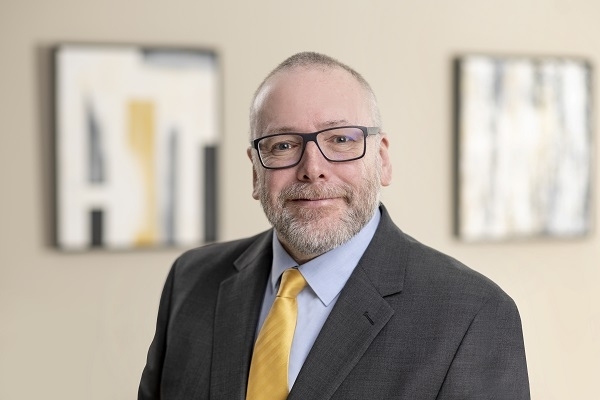
London, Leeds, Exeter


Tue 1st Sep 2026
Get to know David Williams
Service: Patents
Sectors: AI and data science, Electronics and telecoms, Mechanical engineering, Software patents



Discover more about David Williams' broad experience as a Patent Attorney at PWF and beyond, and why he loves the IP industry.
Why did you become a Patent Attorney?
By accident. After graduating, I worked as a design engineer and was looking for my next engineering role. I happened to apply for a trainee Patent Attorney position with an engineering company and was invited for an interview. I didn't get the job, but the interview process gave me an insight into the profession and I found the combination of technology, law and problem-solving really appealing. By the time I left the interview, I was sufficiently enthusiastic about patent law that I focused exclusively on trainee Patent Attorney positions, and I've never looked back.
What attracted you to PWF?
I joined PWF twice!
When I started out, I didn't really have enough experience to distinguish one patent firm from another, or even to know whether private practice was the right path compared with an in-house role. What attracted me to PWF was that many of its clients operated in technical fields that were familiar to me from my engineering background. Just as importantly, there were other trainees at the firm, which meant I could learn alongside people at the same stage of their careers and share the experience of qualifying as a Patent Attorney.
After qualifying, I left PWF to work in-house in industry because I wanted to experience a different side of the profession. When I decided to return to private practice, PWF happened to be recruiting. Having worked here before, I had no hesitation in applying. I knew the quality of the people, the clients and the work, so returning felt like a natural decision.
What’s the best part of being a Patent Attorney?
The people. Over the years I've had the opportunity to work with clients of all shapes and sizes, from first-time inventors to large international companies and everything in-between. Every client is different, and understanding what matters to them is one of the most enjoyable parts of the job. It's particularly rewarding to work with clients over many years and see their businesses grow and develop.
Of course, Patent Attorneys often talk about the variety of technology, but that’s because it really is one of the attractions. I get to work with a wide range of technologies and rarely spend two days looking at the same thing.
What’s your top tip for anyone starting a career in IP?
There is a lot to learn in IP, and there isn't really a shortcut. The route to qualification as a Patent Attorney is a long one, and gaining practical experience takes time. Don’t be impatient or feel that you need to take the exams before you are ready. Focus on learning as much as you can from the people around you and from the work you are given. The knowledge and confidence come with experience, and eventually you realise that all the pieces are starting to fit together.
What’s your greatest professional achievement/most interesting case?
It's difficult to pick a single case. Looking back, what I'm most proud of is having worked with some clients over many years and seeing them grow from individuals or small businesses into successful, established companies. Patents are often a long game, and it's rewarding to know that the advice you've provided over many years has played a small part in helping innovative businesses succeed.
What are your career ambitions?
Twenty years ago I might have answered this question very differently.
Throughout my career, the IP profession, like all workplaces, has continually evolved. I have seen the introduction of email, electronic filing and paperless working. Each change has brought challenges, but also opportunities to work more effectively and provide a better service to clients. None of these changes, however, has arrived as quickly as the recent advances in AI.
As part of the firm’s leadership, I want to help PWF navigate this latest period of change and embrace the opportunities presented by AI responsibly, while preserving the judgement, experience and personal service that our clients value.
What’s the best piece of advice you’ve received?
Early in my career, I was given the advice that communication should always be tailored to the audience. Over the years, I've realised how important that is. Some clients are new to IP and need clear guidance through unfamiliar territory. Others have decades of experience managing patent portfolios and need advice at a very different level.
Before giving advice, I try to put myself in the shoes of the person receiving it. Am I providing the advice they actually need? Am I presenting it in a way that is clear and useful to them? Being a good Patent Attorney isn't just about understanding the law and technology; it's also about communicating effectively.
How do you keep busy when not at work?
A lot of my spare time revolves around supporting my sons and their various activities. That means spending many of my weekends watching cricket and cycle racing from the sidelines. Fortunately, I enjoy both.
When I get the chance, I also enjoy cycling myself. It provides some much-needed exercise, although I don't tend to cycle quite as quickly as I used to think I could.
Who's the most famous person you've ever met?
As a young boy, my mum took me for a haircut and I apparently refused to get in the barber's chair. A gentleman who was having his own haircut persuaded me to sit down and have mine. That gentleman was Bill Shankly. I remember meeting him surprisingly clearly, although I have absolutely no memory of the alleged tantrum that required intervention from one of football's greatest managers. As an Everton supporter, it's probably not quite the meet-the-hero footballing story people might expect!